20 Jun 2026
Virtual Shoe Mechanics in Blackjack: Penetration Depths Drive Shifts in Dealer Procedures and Player Approaches
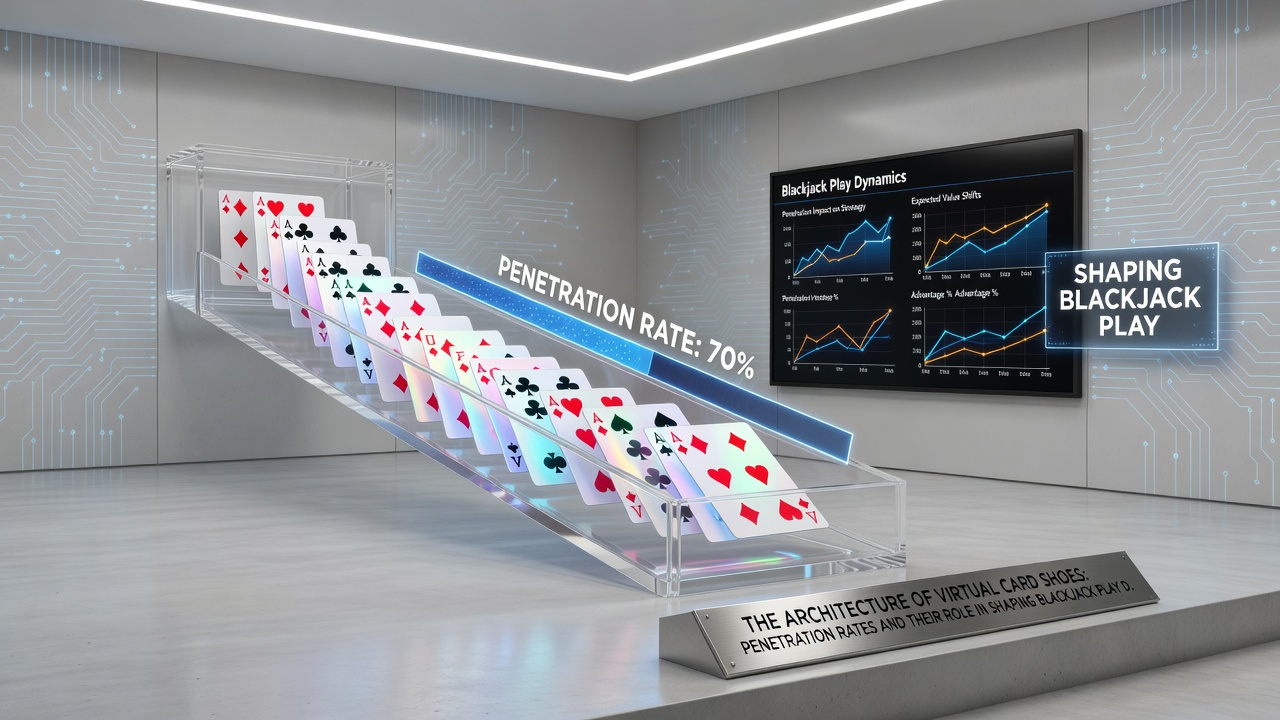
 Virtual card shoes operate through software algorithms that simulate physical decks while enforcing precise rules for card delivery and reshuffling cycles. These systems track every card position from the initial load through the cut card placement, and penetration rates measure the proportion of the shoe that gets dealt before the virtual shuffle resets the sequence. Data from multiple operators shows penetration levels typically range between 60 and 85 percent in regulated environments, with each increment altering the remaining deck composition that players encounter during later rounds.
Core Components of Virtual Shoe Architecture
Software engineers design virtual shoes around modular layers that include the random number generator core, the deck stack manager, and the cut-card trigger module, and these layers interact continuously to maintain game integrity while allowing operators to adjust penetration parameters through administrative controls. The deck stack manager loads multiple decks according to game variant specifications, then positions a virtual cut card at a predetermined depth that corresponds to the target penetration rate. Once the cut card emerges during play, the system initiates an automatic shuffle that restores randomness without manual intervention from dealers or floor staff.
Operators configure these parameters to align with jurisdictional requirements, and regulatory filings from the Nevada Gaming Control Board indicate that approved platforms must document penetration settings before deployment. Such documentation enables audits that verify consistent application across sessions, while players observe the effects indirectly through changes in round frequency and betting opportunities as the shoe progresses.
Penetration Rates and Their Direct Effects on Play Flow
Higher penetration allows more cards to enter active play before reshuffling occurs, which extends sequences where deck composition drifts away from the initial random distribution. Research published by the University of Nevada, Reno demonstrates that each additional 5 percent of penetration increases the window during which card counting techniques retain statistical relevance, although virtual implementations often incorporate countermeasures such as frequent low-level shuffles that limit this advantage. Lower penetration settings, by contrast, trigger earlier resets and thereby reduce the cumulative impact of removed cards on subsequent probabilities.
Dealers in live dealer studios receive instructions based on these configured depths, and the software displays progress indicators that help synchronize physical handling with the digital model. When penetration reaches the programmed threshold, the system pauses dealing and executes the shuffle routine, after which new betting rounds commence with a refreshed deck order. This cycle repeats throughout each session and shapes the rhythm of decisions players make regarding hit, stand, double, and split actions.
Adaptations in Player Decision Patterns Across Penetration Levels
Players adjust wager sizing and strategy deviations as the shoe advances, and those adjustments become more pronounced when penetration exceeds 75 percent because remaining cards carry greater predictive weight. Studies conducted by the Canadian Institute for Gambling Research reveal measurable increases in average bet spreads during the final third of deeper shoes, while shallower penetration configurations produce flatter betting curves because the information value of prior cards diminishes rapidly after each shuffle. Software interfaces often provide real-time counters or remaining-deck meters that assist players in tracking these shifts without requiring external devices.
Tournament formats incorporate fixed penetration rules that standardize conditions across competitors, and reports from the European Casino Association note that such standardization reduces variance caused by differing shoe depths between tables. In cash games the same rules allow operators to balance house edge calculations against player retention metrics, since extended shoes can encourage longer sessions while frequent shuffles maintain faster table turnover.
Technical Adjustments Implemented in June 2026 Platforms
Updates rolled out during June 2026 introduced refined cut-card positioning algorithms that permit operators to fine-tune penetration in increments of one percent rather than the previous five-percent steps. These refinements appear in platform changelogs and enable more granular responses to observed play patterns without altering overall game mathematics. Integration with player tracking systems further allows dynamic adjustments during promotional periods, where temporary increases in penetration coincide with bonus structures that reward extended playtime.
Testing protocols require verification that new settings do not introduce detectable patterns in card sequences, and independent laboratories certify compliance before live deployment. Observers note that these technical layers maintain the core randomness guarantees while giving operators tools to respond to market demands for varied game speeds and depths.
Conclusion
Virtual shoe architecture combined with adjustable penetration rates establishes the operational framework that governs blackjack round progression and strategic opportunity windows. Configuration choices directly influence how deck depletion unfolds, how players calibrate responses, and how regulatory oversight maintains consistency across jurisdictions. Continued refinement of these systems supports both operational efficiency and the statistical integrity that underpins fair play standards.