19 Nov 2026
Real-Time Data Layers Reshaping Blackjack Play and Rewards
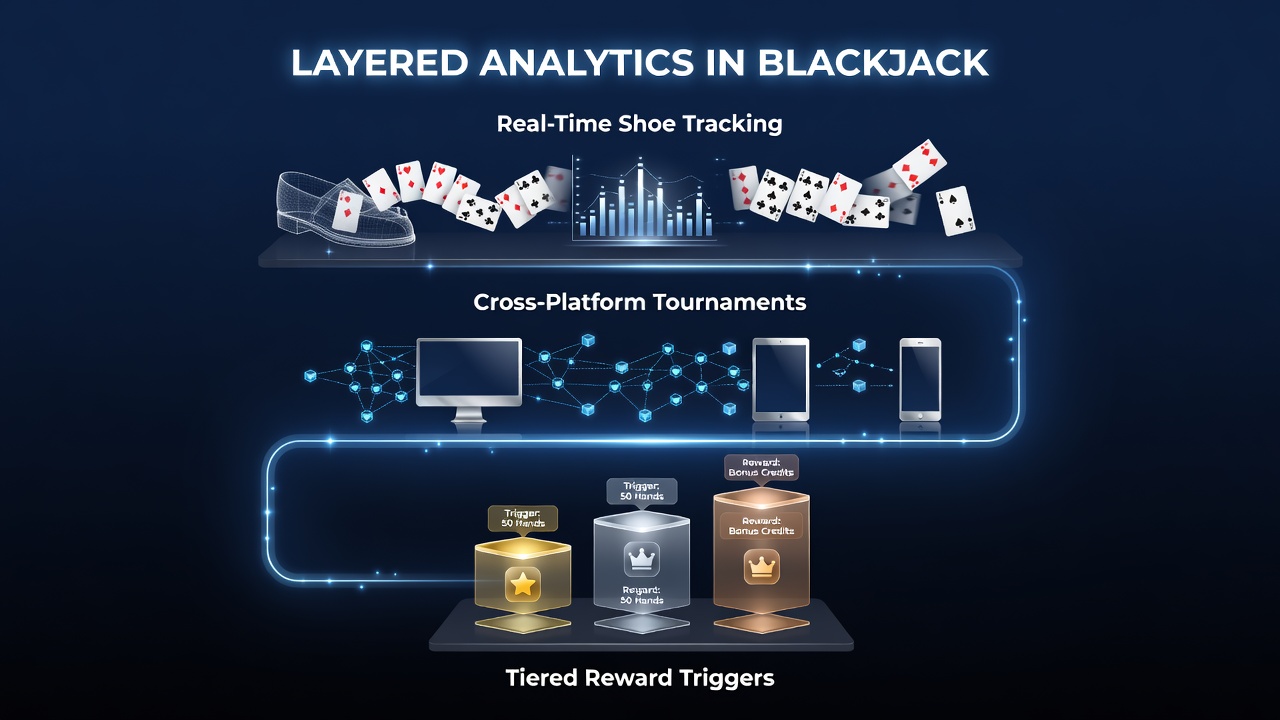
Layered analytics systems now integrate multiple data streams to monitor blackjack operations with greater precision, and operators deploy these tools to track shoe composition in real time while linking player activity across separate tournament platforms. Research from the University of Nevada, Reno indicates that such layered approaches combine penetration depth calculations with behavioral patterns, which allows platforms to adjust game parameters dynamically during sessions that extend into November 2026 and beyond.
Real-Time Shoe Tracking Mechanisms
Shoe tracking relies on sensors embedded in dealing shoes along with software overlays that process card flow data continuously, and observers note that these systems calculate remaining high-value cards with accuracy rates exceeding 95 percent according to figures from the Nevada Gaming Control Board. When decks reach specific penetration thresholds, algorithms trigger alerts that prompt dealers or automated systems to reshuffle, which maintains house edge consistency across live and digital formats. Data shows that platforms using these tools reduce variance in outcomes by correlating shoe states with player decisions in milliseconds, and one study from the International Centre for Gaming Studies found that cross-referencing this information with historical session logs improves predictive modeling for both operators and compliance teams.
Technicians calibrate the layered models daily to account for variations in deck composition and dealing speed, while integration with camera feeds adds another verification layer that catches discrepancies before they affect gameplay. This setup supports regulatory audits in multiple jurisdictions because records remain timestamped and immutable, which helps meet standards set by bodies such as the New Jersey Division of Gaming Enforcement.
Cross-Platform Tournament Integration
Tournament organizers connect separate blackjack environments through shared analytics layers that synchronize entry data, leaderboards, and prize structures, and reports from the Canadian Gaming Association reveal that these connections allow participants to compete in events spanning mobile, desktop, and live dealer tables without resetting progress. When a player completes a round on one platform, the system updates standings instantly across all linked venues, which reduces administrative delays and supports larger prize pools funded by aggregated entry fees.
Engineers design the underlying data architecture to handle thousands of simultaneous sessions, and they incorporate encryption protocols that protect personal identifiers during transfers between platforms. Observers note that this architecture becomes particularly relevant in November 2026 when several regional operators plan synchronized events that draw from global player bases. The approach also enables tournament directors to apply uniform rules while still accommodating regional variations in betting limits or side bet options.

Tiered Reward Trigger Systems
Reward programs operate through tiered triggers that activate bonuses based on cumulative analytics metrics such as hands played, accuracy of decisions, and participation frequency across tournaments. Industry reports compiled by the Australian Institute of Criminology indicate that these triggers evaluate multiple data points simultaneously, which produces personalized offers that scale with demonstrated player engagement rather than simple deposit volume. When thresholds are met, systems issue rewards ranging from entry credits to enhanced payout multipliers, and the layered approach ensures that each tier builds on verifiable performance data instead of arbitrary milestones.
Operators refine these triggers quarterly using aggregated datasets that exclude individual identities, and the process incorporates feedback loops from previous events to adjust difficulty or payout rates. Data from the European Gaming and Betting Association shows that platforms employing this method maintain higher retention rates because players receive clear visibility into the metrics driving their progress. In practice, a participant might advance from bronze to silver status after completing a set number of cross-platform matches with tracked shoe awareness indicators above a defined level, which encourages continued involvement without requiring additional external incentives.
Conclusion
Layered analytics continue to evolve as operators combine shoe tracking, tournament connectivity, and reward mechanisms into unified frameworks that support regulatory compliance and operational efficiency. Figures from multiple oversight bodies demonstrate measurable improvements in data accuracy and player engagement metrics, and these developments position the sector for expanded events scheduled around November 2026. The integration of these layers provides a foundation for future refinements while maintaining transparency across all participating platforms.